Leak Detection and Roof Repairs Succasunna NJ Specialists Recommend


A roof leak rarely starts as a dramatic event. More often, it shows up quietly, as a faint water stain over a hallway, a musty smell in the attic, or a curl in a strip of shingles after a hard winter. By the time water is visible indoors, the path it took through the roof system may already be longer and more complicated than most homeowners expect.
That is why leak detection matters as much as the repair itself. Anyone can chase a stain. Skilled roofing contractors look for the entry point, the travel path, and the condition that allowed the leak to happen in the first place. In places like Succasunna, where roofs take a beating from freeze-thaw cycles, driving rain, snow load, and humid summer storms, that distinction matters. A patch in the wrong spot might hold for a month. A proper diagnosis can hold for years.
Homeowners searching for Roof Repairs Succasunna NJ services are often dealing with an urgent problem, but urgency can push people into fast decisions that do not solve the real issue. The better approach is measured and practical: identify symptoms, inspect likely failure points, understand whether the problem is isolated or systemic, and then repair with materials and methods that fit the age and design of the roof.
Why leaks are harder to trace than they look
Water is patient. It enters at one point, follows the roof deck or framing, and appears somewhere else. A brown ceiling stain can be six feet, ten feet, sometimes farther from the actual breach. On sloped roofs, especially those with valleys, dormers, skylights, or chimney flashing, the leak path can be surprisingly indirect.
This is one reason experienced roofers spend time both outside and inside. Interior evidence tells part of the story. Darkened sheathing, damp insulation, rusted nail tips, mold on rafters, and daylight around penetrations each reveal something different. Exterior evidence fills in the rest. Missing granules, lifted shingles, exposed fasteners, deteriorated pipe boots, cracked sealant, and improperly integrated flashing are all common culprits.
I have seen homeowners focus on the shingle field because that is what they can easily see from the yard, while the real problem sat around a vent stack where the rubber boot had split from age. In another case, a leak over a second-floor bedroom turned out to be caused by ice damming at the eaves, not by storm damage in the middle of the roof. The stain looked simple. The cause was seasonal and structural.
Succasunna roofs face a particular kind of wear
Roofs in northern New Jersey do not fail from one thing alone. They age under a combination of weather patterns that test both materials and workmanship. Winter snow can sit along colder roof edges, melt unevenly, and refreeze. Spring brings wind-driven rain that exposes weak flashing details. Summer heat bakes shingles and expands metal components. Autumn fills gutters and valleys with leaf debris, slowing drainage right before freeze season begins.
That local pattern changes how professionals approach Roof Repairs. A repair that might be adequate in a milder climate can break down faster where temperature swings are sharp. Sealants become brittle. Flashing details that were merely imperfect become active leak points. Small ventilation problems become moisture problems in the attic, and those moisture issues shorten shingle life from below.
Older homes add another layer. Succasunna has a mix of roof ages, additions, and reroofs done at different times. It is common to find transitions where one section has newer shingles and another has older flashing, or where an addition ties into the main roof with a valley that was never detailed well. Those junctions deserve close attention because they often fail before the rest of the roof does.
The places specialists inspect first
A seasoned roofer does not rely on guesswork. Certain areas fail more often than others because they interrupt the clean shedding of water. Flashings around chimneys, sidewalls, and front walls sit high on that list. So do plumbing vent penetrations and furnace or water heater flues. Valleys collect runoff from large roof sections, which means they handle more water than almost any other surface area. Skylights can leak from failed flashing, failed seals, or condensation issues that mimic a roof leak.
Eaves deserve scrutiny too. Damage at the lower edge of the roof is sometimes mistaken for gutter trouble alone, when the real issue involves underlayment, ice and water protection, or poor attic insulation and ventilation that contributes to ice dams. On asphalt shingle roofs, contractors also look closely for nails that backed out, shingles that lost adhesion strips, and tabs that cracked in cold weather.
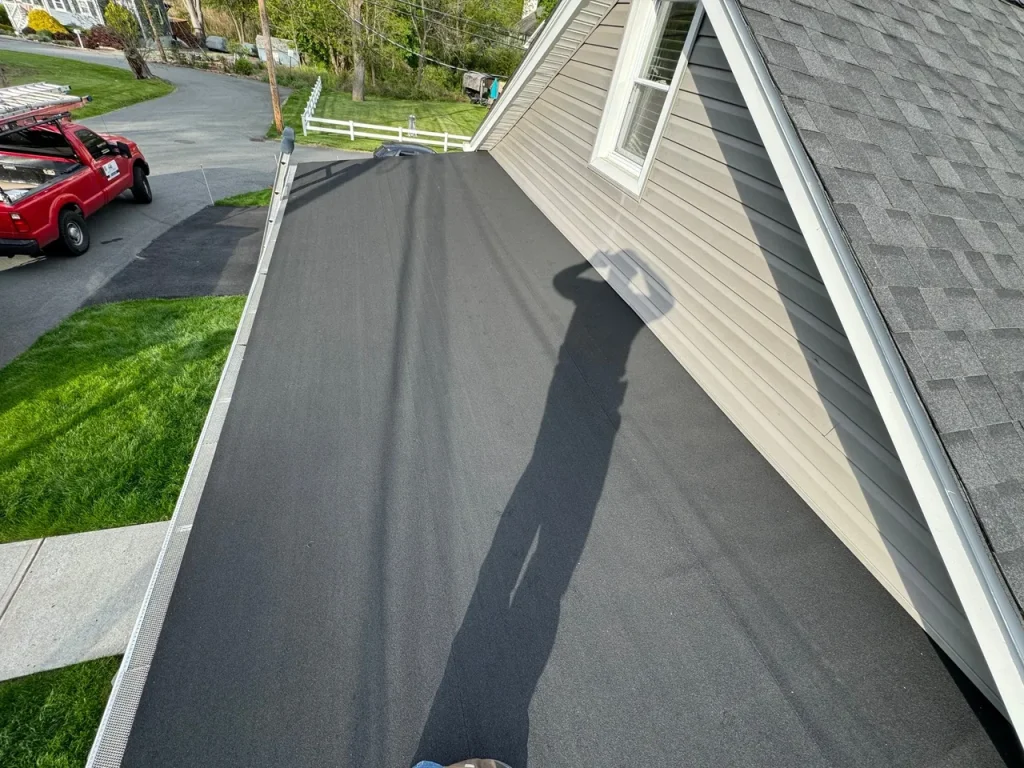
Flat and low-slope sections need a different eye. Ponding water, membrane shrinkage, seam separation, punctures from foot traffic, and clogged drains often drive those repairs. The leak may be active only during certain storms, which can make homeowners doubt what they are seeing. If the same area leaks during wind-driven rain but not during steady rainfall, that points the investigation in a useful direction.
Early warning signs homeowners should not ignore
Small signs usually precede expensive repairs. The problem is that many of them are easy to dismiss until damage spreads into drywall, trim, insulation, and even framing.
- Yellow or brown ceiling stains that slowly widen after storms
- A musty odor in the attic, upper hallway, or closet near an exterior wall
- Shingles that appear lifted, curled, cracked, or unusually bare of granules
- Water marks on chimney masonry or around vent pipes in the attic
- Overflowing gutters or debris-packed valleys after moderate rain
Any one of these signs may or may not mean immediate failure, but each warrants inspection. Waiting often changes a repair into a partial rebuild. Wet roof decking softens over time. Mold growth can begin before active dripping is obvious. Repeated dampness around fasteners can lead to rust and further loosening.
Leak detection is part observation, part process
Good leak detection follows a sequence. First comes a visual survey from the ground and roof surface, if conditions are safe. Next comes the attic or upper interior inspection. Then the findings are matched. If a stain is below a chimney, for example, that does not automatically make the chimney the culprit. A roofer will still check the uphill slope, the flashing integration, the condition of nearby shingles, and whether the masonry itself is absorbing and releasing water.
Moisture meters can help, especially when damage is not visibly obvious. So can a controlled water test, though that only works when done carefully and patiently. Spraying large volumes of water at random rarely helps. Isolating one roof feature at a time does. The goal is not to force a leak, but to reproduce natural conditions closely enough to pinpoint entry.
There is also judgment involved. A contractor might find more than one suspect condition. That happens often on aging roofs. The challenge is deciding which condition is actively leaking now and which should be addressed to prevent the next call. This is where experience pays off. A roofer who has seen hundreds of flashing failures, shingle blow-offs, and ventilation-related moisture issues will recognize patterns faster than someone who treats every stain as a generic patch job.
Roof repairs that actually hold up
Not every leak requires a full roof replacement. Many do not. But durable Roof Repairs rely on matching the fix to the failure. If flashing has failed, adding more caulk on top of old caulk usually buys very little time. If shingles cracked because the underlying deck is soft, replacing the visible shingles https://milojxbk094.trexgame.net/budget-friendly-roof-repairs-in-succasunna-nj-without-cutting-corners without replacing bad wood does not address the cause. If the issue is an aging pipe boot, the repair should focus there, not on broad smears of sealant across surrounding shingles.
On asphalt shingle systems, common lasting repairs include replacing damaged shingles in a properly woven or integrated manner, replacing vent boots, installing or reworking step flashing, repairing valleys, replacing rotten decking in isolated areas, and correcting exposed or misplaced fasteners. On some roofs, resealing specific flashing details is appropriate, but only after surfaces are prepared and the contractor is confident the sealant is being used where it belongs, not as a substitute for proper metal work.
Chimneys are a frequent trouble spot. Counter flashing that has pulled away, step flashing that was never integrated correctly, and masonry crown cracks can all let water in. Homeowners often assume the roof is the only issue, but chimney leaks can involve roofing, masonry, or both. A careful inspection separates those responsibilities so the repair plan is honest.
For low-slope roofs, repairs might involve seam reinforcement, patching punctures with compatible materials, replacing failed flashing at parapet walls, or correcting drainage. Compatibility matters here. Mixing materials casually can create new failure points.
When a repair is smarter than a replacement, and when it is not
This is where many roof discussions get muddled. A ten-year-old roof with one failed flashing detail is a repair job. A roof near the end of its service life with widespread shingle brittleness, recurring leaks, multiple repairs, and poor ventilation may not be worth patching beyond a short-term emergency fix.
Age alone does not make the decision. Condition does. I have seen relatively young roofs fail early because shortcuts were taken during installation. I have also seen older roofs give a few more reliable years after targeted repairs because the underlying system was still sound. The key is honesty about what the repair can and cannot do.
A responsible contractor should be able to explain whether the roof has isolated damage, moderate wear with repairable weak points, or broad failure across multiple components. If a homeowner is told that a small leak requires full replacement, they should ask why. If another contractor insists everything can be patched indefinitely, they should ask the same question. Good advice usually lives between those extremes.
What weather delays can mean for interior damage
One reality of roofing work in New Jersey is that repairs are weather dependent. Rain, snow, ice, and high winds can delay permanent work. That does not mean nothing can be done. Temporary tarping or emergency sealing may be appropriate to reduce active water intrusion until conditions improve.
Still, temporary work has limits. Tarps shift. Emergency sealants degrade. If water has already reached insulation or drywall, interior materials may continue to suffer even after the roof opening is covered. That is why documentation matters. Homeowners should photograph stains, drips, and damaged belongings as soon as they notice them. This helps with insurance discussions where applicable and creates a clear timeline if the issue worsens before permanent Roof Repairs are completed.
Speed matters, but precision matters too. Rushing a repair onto a wet or icy roof can create safety risks and poor workmanship. The best contractors balance urgency with conditions, securing the structure first and returning for lasting repairs when they can be done properly.
The attic often tells the truth
Homeowners tend to focus on what they can see from the yard, but the attic is often where the roof story becomes clear. Even a quick look can reveal dark staining on decking, compressed or damp insulation, poor airflow, and signs of long-term condensation. Not all attic moisture comes from an exterior leak. Sometimes the symptoms point to bathroom fans venting improperly, blocked soffit vents, or inadequate ridge ventilation.
That distinction matters because condensation can imitate leak damage. In winter, warm moist indoor air rises into a cold attic and condenses on the underside of the roof deck. The result can look alarmingly like a roof failure. A specialist who understands building ventilation will not confuse the two. Sometimes the right fix includes both roofing work and airflow corrections. Ignoring one side of that equation can lead to repeat callbacks and frustrated homeowners.
Attic inspections also help determine how far damage has spread. A minor leak caught early may require only localized repair. A leak that has been active across a season may have affected insulation performance, stained framing, or softened sections of decking. Those findings shape the scope and price of the job.
Questions worth asking before hiring for Roof Repairs Succasunna NJ
When homeowners need Roof Repairs Succasunna NJ contractors often arrive after a stressful event, a storm, a ceiling stain, or a sudden drip over a light fixture. That stress can make it harder to evaluate proposals. A few direct questions can cut through the sales talk.
- What is the likely source of the leak, and what evidence supports that diagnosis?
- Is the repair addressing the cause, or mainly controlling symptoms for now?
- Will any damaged decking, flashing, or underlayment be replaced if found during the work?
- How closely can the new materials match the existing roof, and what limits should I expect?
- If weather delays permanent work, what temporary protection is realistic in the meantime?
The strongest answers are specific and calm. Vague promises are a warning sign. So is a proposal that leans heavily on sealants without discussing flashing, underlayment, or substrate condition. Roof systems fail at connections and transitions more often than on the open field, so a contractor should be able to speak confidently about those details.
Repair costs vary because leak causes vary
Homeowners naturally want a price right away, but leak repair costs swing widely depending on access, roof pitch, material type, the number of layers already on the roof, how much hidden damage exists, and whether the issue involves adjacent components like chimney masonry or siding.
A simple vent boot replacement is a different job from rebuilding a chimney cricket or opening a valley with rotten decking beneath it. Even finding the leak can take time on complex roofs, especially where the visible stain is far from the entry point. Reputable contractors usually explain this rather than offering a low number that changes dramatically after work begins.
If an estimate seems much lower than others, it is worth asking what is being omitted. Will they replace matching shingles or just reuse brittle ones? Are they removing and reinstalling flashing correctly or smearing sealant around the problem area? Are they planning to inspect the attic, or only the exterior? Lower pricing is not always wrong, but it should be understandable.
Why preventive maintenance still matters after a repair
One successful repair does not mean the roof can be ignored. Once a leak appears, the roof has effectively asked for a closer look. That does not have to mean constant service visits. It usually means a sensible inspection rhythm, especially after major storms and at seasonal transition points.
Clearing gutters, trimming overhanging branches, checking for storm-displaced shingles, and watching indoor ceilings after freeze-thaw periods can extend the life of the roof and reduce surprise leaks. Homeowners do not need to become roof experts, but they do benefit from noticing changes early. A ten-minute walk around the house after heavy weather often catches issues while they are still manageable.
There is also value in records. Keep photos, invoices, and notes about where repairs were made. If another leak appears later, that history helps the next contractor understand whether the problem is new, related, or part of a broader aging pattern.
What separates a specialist from a quick patch crew
The difference usually shows up in diagnosis, not just in workmanship. A specialist explains where the leak began, how water traveled, what components failed, and what the repair is designed to accomplish. They inspect the attic when needed. They look beyond the stain. They talk about flashing, ventilation, drainage, and material compatibility. They also acknowledge uncertainty when a leak is intermittent and requires methodical testing.
Quick patch crews tend to speak in absolutes before they have enough evidence. They may promise a permanent fix after a five-minute glance from the driveway. Their repairs often depend too heavily on surface sealants because sealants are fast. Fast is appealing when water is coming in, but speed without diagnosis is expensive over time.
For homeowners in Succasunna, the practical goal is not just to stop the next drip. It is to preserve the roof system, protect insulation and framing, and avoid the cycle of repeated service calls. That is what thoughtful leak detection and well-executed Roof Repairs are supposed to do. When the diagnosis is right, the repair tends to look less dramatic from the outside and perform far better where it counts.
Royalty Exteriors
Address: 151 NJ-10 Ste 103A, Succasunna, NJ 07876
Phone number: +19733337234
FAQ About Roof Repairs Succasunna NJ
How much should I pay for roof repairs?
Most homeowners pay an average of $900 to $1,200 for roof repairs, with typical projects ranging from $150 to $3,000+ depending on the severity of the damage.
What are the most common roof repairs?
The most common roof repair is fixing water leaks by replacing damaged, cracked, or missing asphalt shingles and sealing compromised flashing.
Does homeowners insurance pay for roof repairs?
Homeowners insurance pays for roof repairs only if the damage is sudden and accidental, such as from a storm, hail, or a falling tree.